


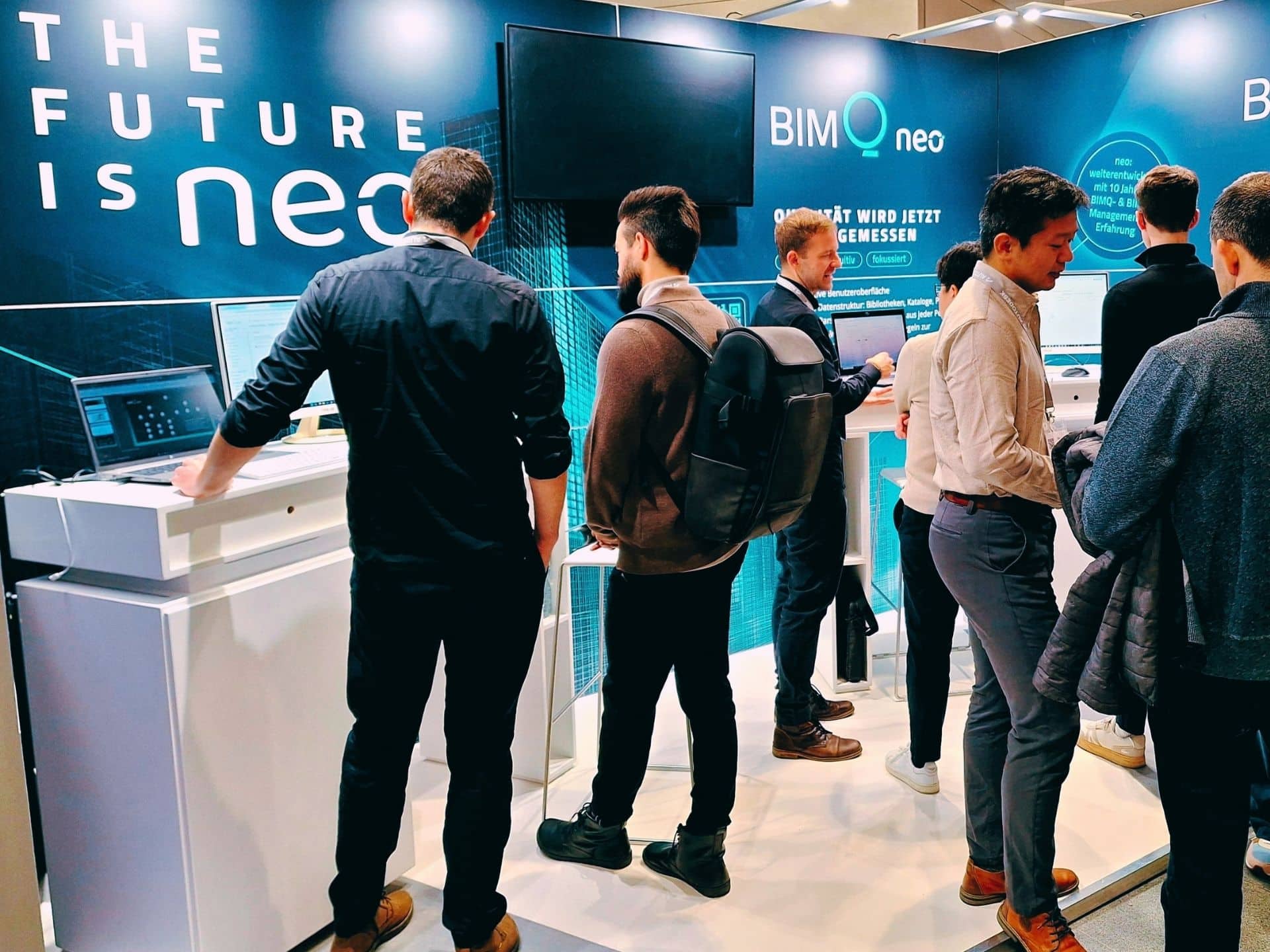
AEC3 at BIM World Munich | Experience BIMQ live
Event
23. September 2026


Die neue Organisation in Projekten, Katalogen & Bibliotheken auf der Grundlage bewährter LOIN-Strukturen machen Inhalte projektunabhängig, versioniert und gezielt wiederverwendbar.

Die integrierte Suche und das performante User-Interface reduzieren die Navigation durch komplexe Projektstrukturen. Intuitiver, direkter Zugriff auf sämtliche Inhalte vereinfacht das Ausführen von Änderungen.

Der überarbeitete LOIN-basierte Aufbau sorgt für klare, verständliche Strukturen und ist ISO-konform. Das Pflegen von Tags zur Sortierung, die integrierte Suche, sowie individualisierte Ansichten schaffe eine klare Übersicht über die Inhalte.
Verschaffen Sie sich einen ersten Einblick in die nächste Generation von BIMQ. Die ganzheitlich überarbeitete Nutzeroberfläche und der erweiterte Funktionsumfang von BIMQ neo bieten klare Verbesserungen im Änderungsmanagement und in der kollaborativen Pflege und Organisation von Anforderungen.

flüssiges & effizientes Arbeiten
BIMQ neo kommt mit komplett überarbeiteter, moderner Benutzeroberfläche. Direktes Feedback, Tooltips und klarer Informationshierarchie erleichtern den Umgang mit großen Datenstrukturen. Verbesserte Vorlagen und aufbereitete Inhalte machen das System schneller bedienbar. Der schnelle Zugriff auf Inhalte und individualisierbare Screen-Layouts schafft einen klaren Fokus auf das Wesentliche – für flüssiges & effizientes Arbeiten.
Intuitiv & verstänbdlich
Der überarbeitete LOIN-basierte Aufbau und die Organisation in Projekten, Katalogen & Bibliotheken machen Inhalte projektunabhängig, versioniert und gezielt wiederverwendbar.
Die integrierte Suche und Sortierung mit neuer Tagging-Funktion sowie das performante User-Interface machen die Navigation durch komplexe Projektstrukturen intuitiv und schnell verständlich.

BIM plus Quality: Welcome to BIMQ – the professional information management system from AEC3.
Countless customers have already been won over by BIMQ. We would love to welcome you as a satisfied customer soon, too.


Reliably tender for construction projects, manage them confidently and accept them in a binding manner? Integrate company relevant data directly into the CAFM? Manage your projects holistically with BIMQ.
Whether as PDF-attachment of the employer’s information requirements (EIR), in the Excel spreadsheet for the BIM execution plan (BEP) coordination, as an attribute template for the BIM-software, as a test rule for the model checker, or always online in the BIMQ viewer with a comment-function for coordination – as a team, keep control of the attribute and modelling requirements for your BIM project.

Information requirements for all project participants: detailed as EIR/BEP-attachment or compact as Excel-matrix

Attribute template for planning software: import the requested attributes directly in the software and export the right IFC-files

Test rules for validation: automatically check the provided IFC-models against the information requirements


Step 1: Plan
With BIMQ you create individual information requirements for your projects based on your own or provided catalogues. With them, you create the necessary attachments for the Exchange Information Requirements (EIR) and the BIM Execution Plan (BEP). Additionally, you provide the project participants with the element/attribute delivery tables as Excel or online and have them add comments.
Step 2: Do
The architects and engineers can digitally transfer the information requirements directly into their BIM software as attribute templates, with all data types, units and selection fields. This is not only much more efficient, it also eliminates sources of error, such as simple typing errors. And if the IFC files are to be exported from the BIM software, BIMQ provides the necessary configuration files.


Step 3: Check
With BIMQ, the test rules for the quality check can be exported automatically. This allows you to check the IFC models for the correct information content very specifically for the required work phase, the set use case and specifically for each discipline model.
Step 4: Act
After the quality check, the models can be reliably used for the various applications: only quality-in guarantees quality-out. But the information requirements themselves often need to be further improved in the project – for this, BIMQ offers the transparent cloud solution for all those involved in the BIM process.

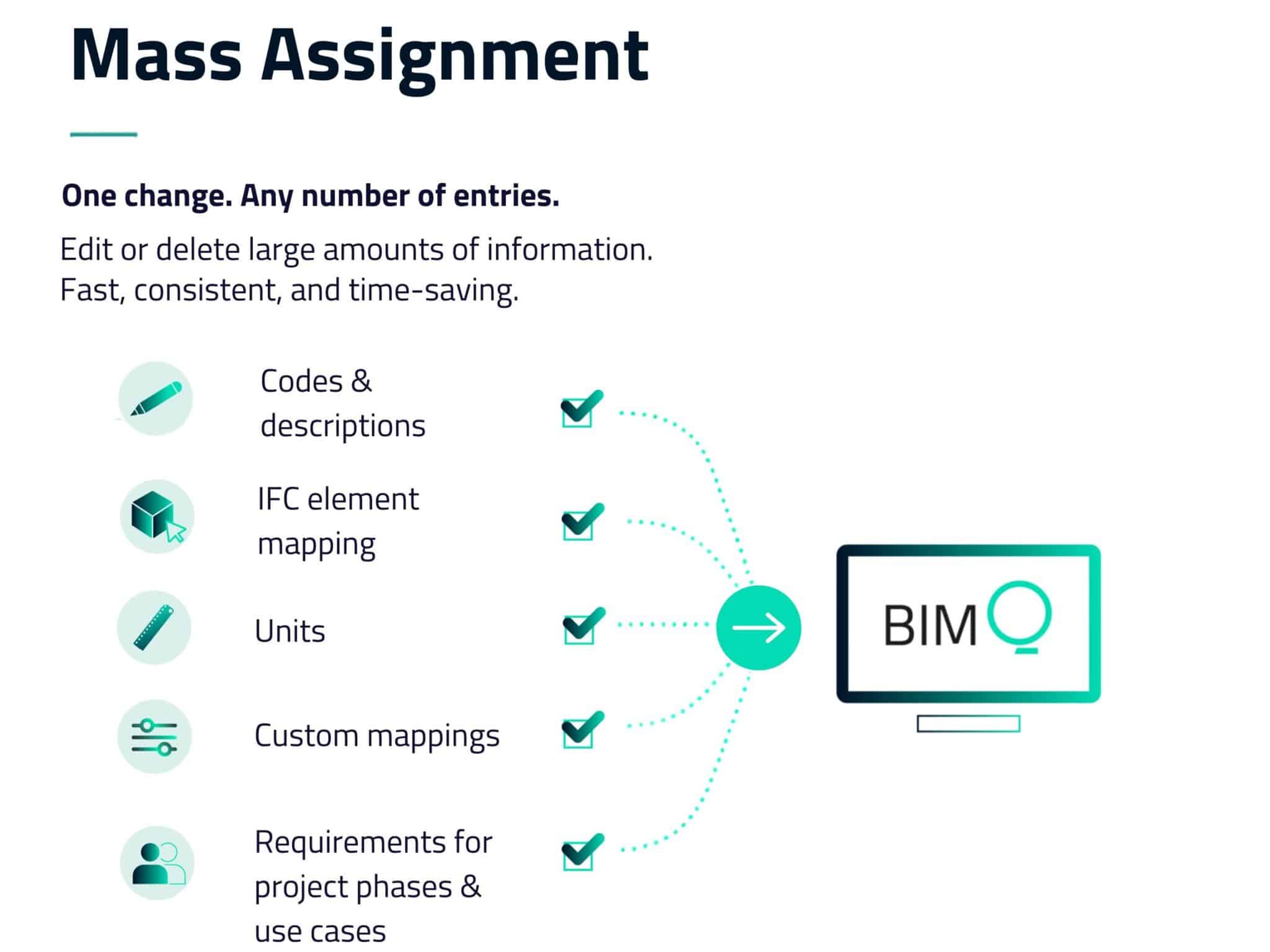


Can you integrate software templates and test rules into BIMQ? Not a problem. Many construction software manufacturers trust the AEC3 team.


